


What MOQ Terms Actually Mean When Sourcing Retractable Wall Mounted Clothes Drying Racks
MOQ — minimum order quantity — sounds straightforward until you’re actually in negotiation with a supplier and realize the number on the spec sheet tells only part of the story. For buyers sourcing a retractable wall mounted clothes drying rack at commercial volumes, understanding what MOQ terms actually cover is the difference between a smooth first order and an expensive misunderstanding.
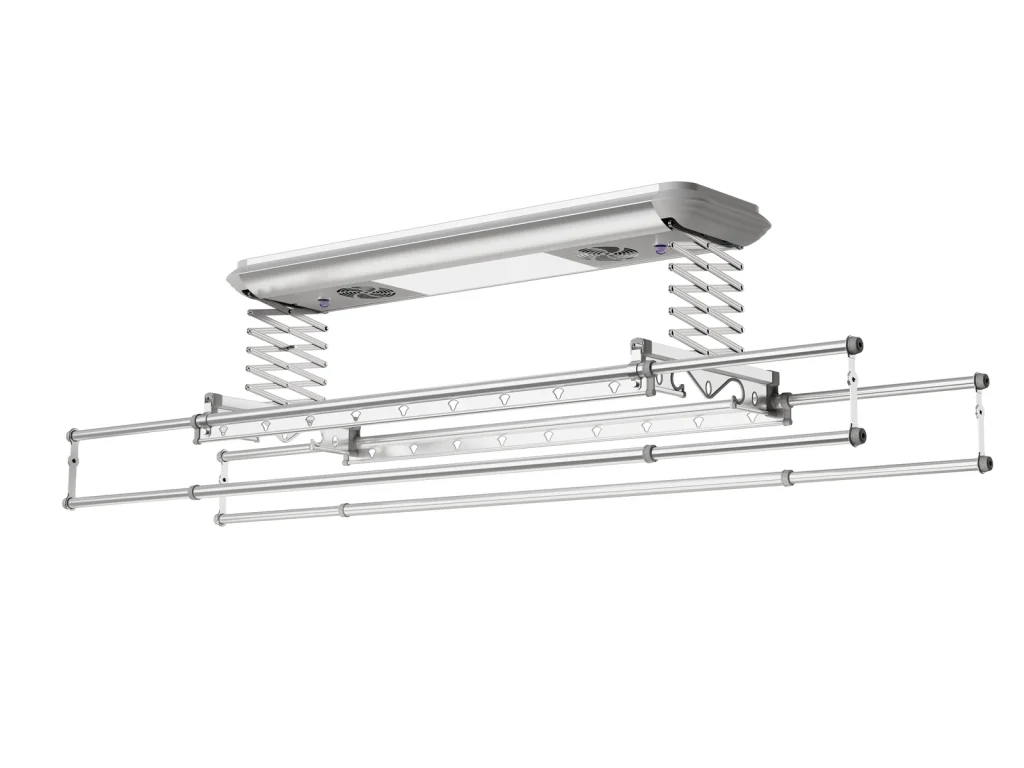
Most factories quote MOQ at the SKU level. That means the minimum applies per model, per finish, or sometimes per configuration — not across your total order. So if you’re sourcing three variants of a retractable wall mounted clothes drying rack (say, a single-arm, a double-arm, and an extended-reach version), each variant may carry its own MOQ threshold. Your combined order volume might look healthy on paper, but you could still fall short on individual lines.
There are a few MOQ structures worth understanding before you enter any supplier conversation:
- Per-SKU MOQ — the most common structure; each product code has its own minimum, regardless of total order size.
- Per-order MOQ — a total unit or total value floor applied across all SKUs in a single purchase order; more flexible for buyers trialing multiple configurations.
- Per-container MOQ — common with export-oriented suppliers; the minimum is effectively driven by container fill efficiency rather than unit count.
- Tooling-linked MOQ — applies when custom brackets, finishes, or branding are involved; the minimum reflects amortization of setup costs across the run.
OEM and ODM orders add another layer. If a buyer specifies a custom wall-mounting bracket design or a private-label finish on a retractable wall mounted clothes drying rack, the supplier’s MOQ will typically rise — sometimes significantly — to recover tooling investment. Suppliers with in-house product development capability, like those operating in China’s home hardware export sector, will often negotiate tiered MOQ structures across initial and repeat orders, which can make custom projects more viable at lower entry volumes.
The practical takeaway: always ask for the MOQ breakdown per SKU, per customization level, and per shipment method before committing to a supplier. What looks like a favorable headline number can fragment quickly once configuration options and packaging specifications enter the picture.
How to Evaluate Supplier MOQ Flexibility for Wall Mounted Clothes Airer Orders
MOQ flexibility isn’t just about the number — it’s about how a supplier structures that number across different order scenarios. A retractable wall mounted clothes drying rack supplier might quote a low headline MOQ for their standard catalogue unit, but that figure can shift considerably once a buyer introduces variables: different cord lengths, alternative mounting hardware, or market-specific packaging. The real test of a supplier’s flexibility is whether they can articulate those shifts clearly and offer structured options rather than a flat “take it or leave it” threshold.

There are several signals worth probing during initial supplier conversations:
- Whether the supplier distinguishes between trial order MOQs and ongoing replenishment MOQs — suppliers with export-oriented operations often build this tiering in by default.
- How they handle mixed-SKU orders — can a buyer consolidate multiple configurations of a retractable wall mounted clothes drying rack into a single shipment to meet the minimum, or does each variant carry its own floor?
- Whether MOQ adjustments are available in exchange for longer lead times — some manufacturers will accept smaller runs if the production window is extended to reduce scheduling pressure.
- How the supplier treats repeat buyers — first-order MOQs are rarely the same as the terms available after a successful commercial relationship is established.
Freight method matters here too. Sea freight economics push buyers toward larger volumes; air freight can sometimes support a smaller run without the per-unit cost becoming prohibitive. A supplier who understands export logistics — not just manufacturing — will factor this into their MOQ conversation rather than treating it as a separate issue.
One practical evaluation approach: present the supplier with two or three realistic order scenarios at different volumes and ask for a written response on feasibility, مهلة, and per-unit cost at each level. A supplier who responds with specifics is demonstrating both operational transparency and genuine interest in a working relationship. A supplier who deflects or responds only in generalities — that’s a signal worth taking seriously before any purchase order moves forward.
Negotiating MOQ Terms: What Retractable Drying Rack Manufacturers Will and Won’t Budge On
MOQ is rarely a fixed wall — but knowing which parts are genuinely flexible, and which aren’t, saves you weeks of going in circles. With retractable wall mounted clothes drying rack production, manufacturers are working under real constraints: tooling amortization, raw material purchase minimums, production scheduling. Those inputs all feed into the number they quote you. Asking for a lower MOQ without understanding any of that is a bit like negotiating rent without knowing what the landlord owes on the place.
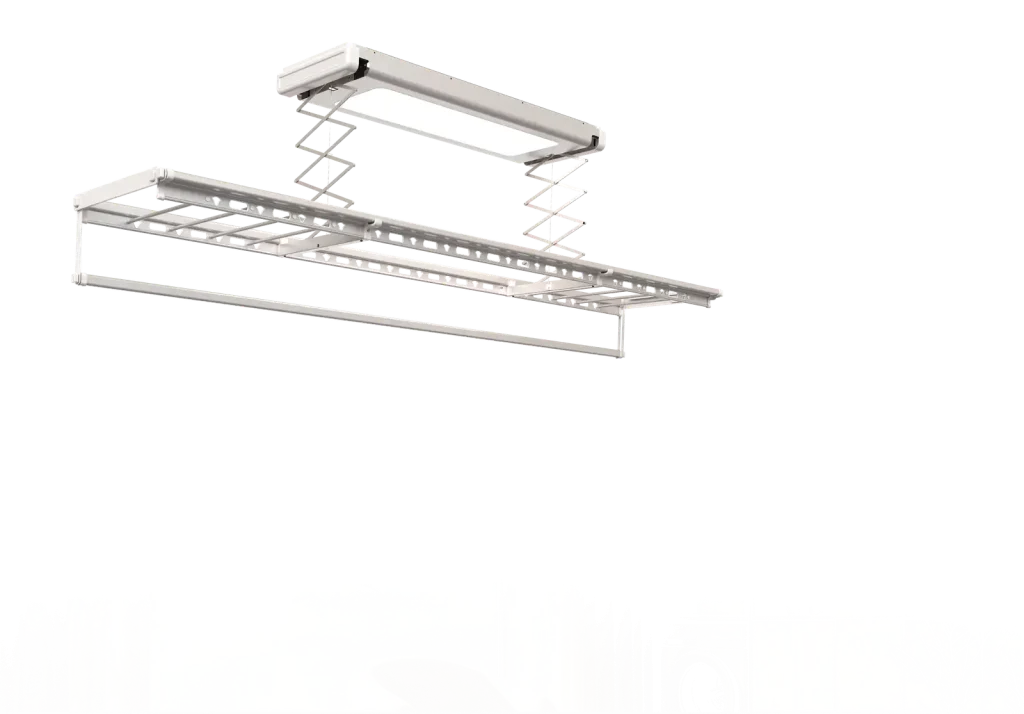
So where do manufacturers actually have room to move?
- Order phasing — splitting a bigger annual volume into two or three shipments, with a first-order minimum that sits below the standard MOQ threshold
- Mixed-SKU arrangements — combining multiple variants of the same retractable wall mounted clothes drying rack (different arm counts, finishes, weight ratings) to hit a combined unit minimum
- Deposit structures — some factories will take a higher deposit percentage in exchange for a reduced initial quantity, especially with repeat buyers they already know
- Sample and trial orders — experienced export suppliers often have a defined trial-order tier, usually at a higher per-unit cost, for buyers who need to test market reception before going all in
And where they won’t move — or really shouldn’t be expected to:
- Custom tooling costs on proprietary bracket designs or mounting hardware; those are fixed no matter the volume
- Packaging customization minimums, which are often set by the packaging supplier anyway — not the factory
- Certification and compliance testing fees, which apply per SKU regardless of how many units you’re ordering
That distinction matters more than most buyers realize. Push back on the wrong variables — tooling costs, compliance fees — and you’re signaling to the supplier that you haven’t done your homework. That shifts the dynamic fast, and it’s hard to walk back. Push back on the right variables, with a credible counter-proposal and a realistic volume projection? That tends to open a much more useful conversation.
Suppliers with real export experience — the kind running OEM and wholesale programs across multiple markets, like the teams coordinating production for international buyers at منشرة ملابس LB — will usually have a documented position on each of these points. A factory that can’t tell you where its MOQ flexibility starts and stops is, still figuring out its own commercial model. Not necessarily a dealbreaker. But it does affect how much room a buyer realistically has to work with going in.
Total Cost Implications of MOQ Commitments for Wall Mounted Drying Rack Procurement
MOQ commitments don’t exist in isolation — they pull a chain of downstream costs that procurement teams sometimes underestimate until the invoices start landing. For a retractable wall mounted clothes drying rack order, the headline unit price is rarely the number that determines whether a sourcing decision was sound. What matters is the fully loaded cost across the entire procurement cycle.
Start with working capital. A higher MOQ locks capital into inventory before a single unit reaches a distribution point or end customer. For buyers entering a new market or testing a product variation — say, a dual-rail retractable wall mounted clothes drying rack with a different load rating than their existing range — that capital exposure carries real risk. The unit economics might look attractive at volume, but the carrying cost of unsold stock can erode that margin faster than a modest per-unit saving justifies.
Freight consolidation is another variable that shifts the total picture. Smaller MOQs often mean partial container loads, which carry a proportionally higher freight cost per unit. Larger MOQs that fill a container cleanly tend to produce better landed cost outcomes — but only if the order volume actually reflects demand, not just a price optimization exercise.
A rough breakdown of where total cost exposure typically accumulates across an MOQ-driven order:
- Unit ex-works price (which varies with volume tier)
- Tooling or customization amortization spread across the MOQ
- Freight mode and consolidation efficiency
- Port and import duty classification for wall-mounted hardware
- Quality inspection fees — per-shipment costs that don’t scale linearly with volume
- Warehousing and inventory holding costs at destination
Suppliers running structured OEM programs — the kind that handle retractable wall mounted clothes drying rack production across multiple international specifications — will often present tiered pricing that makes the volume-cost relationship explicit. That transparency is useful. It lets procurement teams model scenarios honestly rather than reverse-engineering the numbers after a commitment is already made. The buyers who negotiate well at this stage are usually the ones who arrive with a total-cost model, not just a target unit price.
خاتمة
The buyers who get this right aren’t the ones chasing the lowest unit price — they’re the ones who understand the full cost picture before a purchase order gets signed.
A retractable wall mounted clothes drying rack sounds like a simple product. It isn’t. The specification choices, volume thresholds, and supplier capabilities all compound on each other in ways that aren’t obvious until you’re already mid-negotiation. Work with a supplier who can make the pricing tiers explicit and the customization scope clear from the start — that transparency is worth more than a marginally cheaper quote from someone who won’t.
Get your total-cost model sorted before you commit to anything. That’s the move.
الأسئلة المتداولة
س: What is a retractable wall mounted clothes drying rack and how does it work?
أ: A retractable wall mounted clothes drying rack is a laundry drying system fixed to a wall that folds flat when not in use and extends outward — via arms, rails, or a fold-out frame — when you need it. The mechanism varies: some use telescoping horizontal bars, others use a scissor-fold design or pivoting arms. When retracted, most sit within a few inches of the wall, which is the whole point for space-constrained rooms.
س: How much weight can a wall mounted clothes drying rack typically hold?
أ: Load capacity varies significantly by build quality and mounting method — lighter consumer models often handle somewhere in the range of 15–25 kg, while heavier-duty units designed for commercial laundry or larger households can handle considerably more. The weak point is almost never the rack itself; it’s the wall fixings. A rack rated for 30 kg mounted into drywall with the wrong anchors will fail long before a properly wall-plugged unit at the same rating.
س: Is a retractable wall mounted clothes drying rack worth it for a small apartment?
أ: For small apartments — especially those without outdoor drying space — a retractable wall mounted clothes drying rack is one of the more practical hardware investments you can make. The key advantage over a freestanding airer is the floor space it returns to you the moment laundry is done. That said, placement matters: mount it somewhere with airflow, not behind a door or in a dead corner, or you’ll find clothes taking twice as long to dry.
س: How do I choose the right wall for installation?
أ: Solid masonry or timber stud walls are the most reliable mounting surfaces — hollow partition walls need specialist fixings and are worth treating with caution for anything carrying a real load. Bathrooms and laundry rooms are the obvious locations, but ventilation matters more than most buyers realise; a rack in a poorly ventilated space creates a condensation problem, not a drying solution.
س: Why do some retractable wall mounted clothes drying racks cost significantly more than others?
أ: The price gap usually comes down to three things: material grade (powder-coated steel versus stainless versus chrome-plated mild steel), the mechanism quality — specifically how the extension arms or rails are engineered to handle repeated use without sagging — and finish consistency. Cheaper units often look identical in product photos but use thinner-gauge steel that bends under load over time. Suppliers who support OEM or custom specification work, like those focused on the wholesale export market, tend to make these material differences explicit in their spec sheets; budget-end listings rarely do.
س: How long does a retractable wall mounted clothes drying rack last?
أ: Lifespan depends almost entirely on two factors: the environment it’s installed in and the quality of the pivot or extension mechanism. In a humid bathroom, a unit without proper rust-resistant coating will degrade noticeably within a couple of years. A well-specified stainless or quality powder-coated rack in a ventilated space — used daily — can realistically last a decade or more without the mechanism becoming loose or the bars deforming.
س: Can a retractable wall mounted clothes drying rack be customised for commercial laundry or hospitality settings?
أ: Commercially, yes — and this is where working with a manufacturer that offers OEM and ODM support becomes relevant. Bar spacing, total rail length, load rating, finish, and even wall-bracket configuration can typically be adjusted for bulk orders. Standard retail units are built around household use cases; if you need higher load tolerances, specific dimensions to fit a fitted wardrobe or utility room, or a particular finish to match a design spec, that requires a supplier conversation, not just a product listing.
س: How do I stop a retractable drying rack from pulling away from the wall over time?
أ: The most common cause is incorrect anchor selection at installation — the rack’s weight rating means nothing if the fixings aren’t matched to the wall substrate. Use the correct rawlplugs or toggle bolts for your wall type, and if you’re in any doubt, go a size up on the fixing. Periodically check that mounting screws haven’t worked loose, particularly in the first few months of use when the rack is being extended and retracted daily.