


What Actually Drives the Cost of an Automatic Clothes Drying Rack Order
Pricing on an automatic clothes drying rack order rarely breaks down the way buyers expect it to. The unit cost visible on a supplier quote sheet is almost always the least interesting number — what actually determines landed cost, margin, and long-term supplier viability sits underneath that figure, in the mechanical and commercial decisions made well before production starts.
The mechanics are straightforward enough. Higher MOQs spread fixed production costs — tooling amortisation, QC setup, freight consolidation — across more units, which pulls the per-unit cost down. But that cost reduction only holds if your sell-through velocity supports the larger commitment. Buyers who chase the lowest per-unit price by accepting a high MOQ, then sit on slow-moving inventory, often find the carrying cost erases the savings entirely.

A few practical thresholds worth understanding when evaluating suppliers:
- MOQs below 200 units typically indicate a trading company or small-batch operation — useful for market testing, but rarely cost-optimised for scale
- 200–500 units is the working range for most mid-tier retail and hospitality procurement programmes, where suppliers can offer meaningful price breaks without demanding warehouse-scale commitment
- 500 units and above generally unlocks custom tooling contributions, dedicated production slots, and more negotiable payment terms — relevant for buyers placing branded or OEM-spec automatic clothes drying rack orders
Where things get complicated is at the specification intersection. A supplier quoting a low MOQ on a standard configuration may impose a separate — and significantly higher — MOQ on any customised variant. Rail length changes, motor-type substitutions, or control panel modifications can each carry independent minimums. Suppliers experienced in export-oriented production, including those handling OEM and ODM programmes across multiple markets, typically build these variant thresholds into their initial quotation rather than surfacing them mid-negotiation.
The practical implication: always request a tiered price schedule — not just a single MOQ figure — before committing to a supplier shortlist. The spread between their minimum and their optimal run quantity tells you more about their production model than almost anything else in the initial RFQ response.
Customization Requests That Add Cost (and the Ones That Don’t)
Not every modification to an automatic clothes drying rack specification carries the same cost implications — and conflating the expensive requests with the routine ones is a reliable way to misread a supplier quotation. Procurement teams that understand which changes are absorbed into standard tooling and which trigger genuine engineering costs are in a much stronger negotiating position.
Requests that typically add meaningful cost:
- Motor type substitution — swapping a standard AC motor for a DC brushless unit, or integrating a quieter motor variant, usually requires retooling the mounting bracket and revising the drive assembly. This is not a cosmetic change.
- Control system modifications — adding Wi-Fi or app-based controls to a rack originally designed for a wall switch involves firmware development, antenna integration, and often separate certification testing for the target market.
- Load capacity upgrades — increasing the rated load of an automatic clothes drying rack means structural recalculation of the rail, pulley system, and ceiling anchor points. Suppliers cannot simply approve a higher figure without engineering sign-off.
- Non-standard surface finishes — bespoke powder coat colours or anodised finishes outside a supplier’s existing colour library require separate batch processing, which rarely makes economic sense below a certain volume threshold.
Requests that are routinely absorbed with minimal or no cost uplift:
- Rail length adjustments within a supplier’s existing die range — most manufacturers offer modular rail systems and can accommodate standard length increments without new tooling.
- Private label and packaging customisation — logo application, branded packaging inserts, and retail-ready labelling are standard OEM services at most export-oriented facilities.
- Cord colour or accessory colour matching — minor cosmetic alignment to a buyer’s product line is typically handled within existing production runs.
The distinction matters because suppliers sometimes present all customisation requests under a single “custom surcharge” line — which obscures whether you are paying for genuine engineering work or for a routine adjustment that competitors would absorb. Asking a supplier to itemise customisation costs by category, rather than accepting a bundled figure, gives buyers the granularity needed to compare quotations accurately across a shortlist. Suppliers with structured OEM and ODM programmes will usually have this breakdown ready; those that cannot produce it are worth scrutinising more carefully.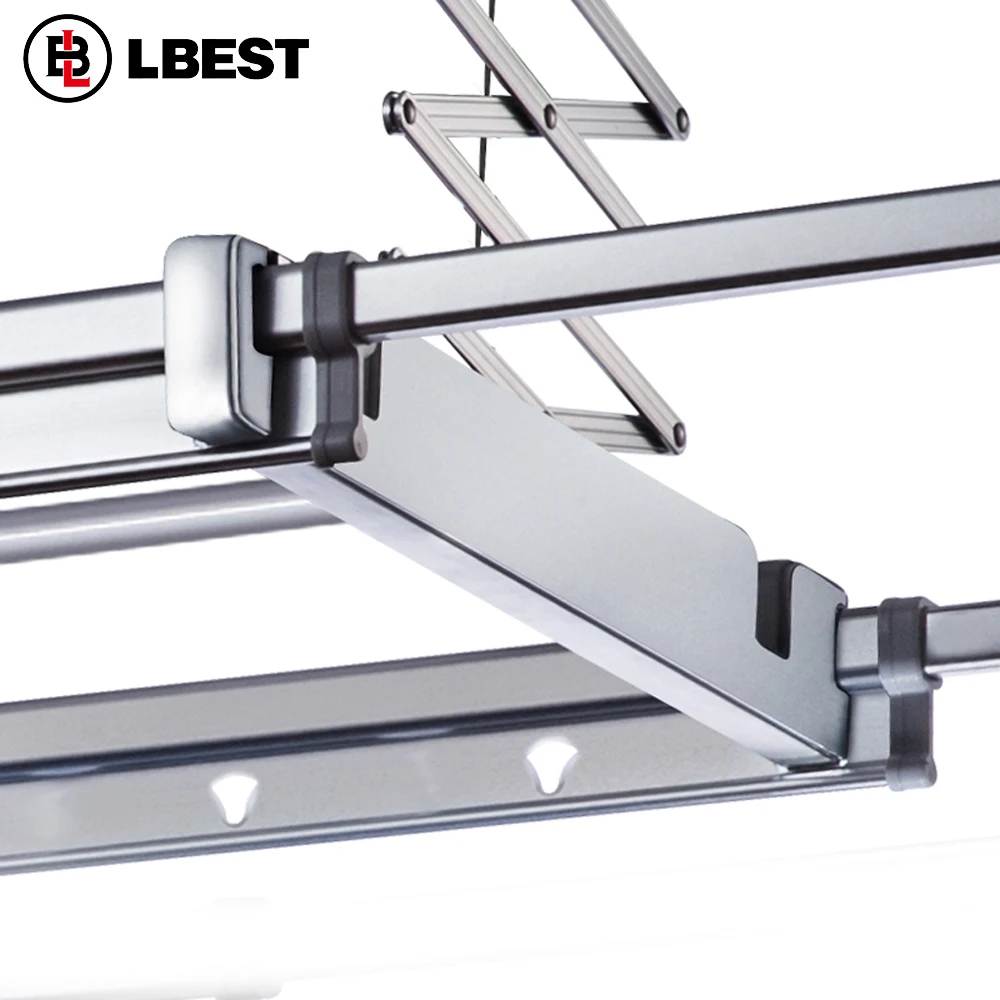
Conclusion
The buying decision for an automatic clothes drying rack really comes down to two things: whether the motor and control system are genuinely built for long-term residential use, and whether your supplier can actually separate real engineering costs from routine production adjustments on a quotation.
Don’t accept a bundled “custom surcharge” without a breakdown. That single habit will save you from overpaying — and from working with suppliers who can’t explain their own pricing.
Get the itemised costs, verify the motor specs against your target market’s usage patterns, and you’re already ahead of most buyers at this stage.
Frequently Asked Questions
Q: What is an automatic clothes drying rack and how does it differ from a standard airer?
A: An automatic clothes drying rack uses a motorised lift system — typically ceiling-mounted — to raise and lower the drying bars at the press of a button, rather than requiring manual adjustment or fixed positioning. The practical difference is significant: standard airers sit at a fixed height and take up floor space, while motorised ceiling units use otherwise dead overhead space and can be raised out of the way when not in use.
Q: How much weight can an automatic clothes drying rack typically hold?
A: Load capacity varies by model and motor rating, but most residential automatic clothes drying racks are rated to handle somewhere between 15 kg and 30 kg of wet laundry across all bars combined. That said, rated capacity and real-world performance aren’t always the same thing — a motor running consistently at its upper limit will wear out faster, so buying with a buffer above your typical laundry load is the smarter move.
Q: Is an automatic clothes drying rack worth buying for a small apartment?
A: For small apartments, a ceiling-mounted automatic clothes drying rack is often one of the highest-utility purchases available — it reclaims floor space that a freestanding airer would otherwise occupy permanently. The main consideration is ceiling height; rooms below roughly 2.4 metres may not give you enough clearance to operate one comfortably.
Q: How long does the motor on an automatic clothes drying rack last?
A: Motor lifespan depends heavily on build quality and usage frequency, but a well-specified unit from a supplier who can verify the motor’s duty cycle rating should hold up for several years of daily residential use. The components most likely to fail first aren’t the motor itself — they’re the wire rope and the limit switches, both of which are typically serviceable if the manufacturer supports replacement parts.
Q: Can I install an automatic clothes drying rack in a rental property?
A: Ceiling-mounted models require drilling into joists or a structural ceiling, which most rental agreements prohibit without landlord consent. Some buyers work around this with freestanding motorised rack systems, though these sacrifice the space-saving advantage that makes automatic clothes drying racks genuinely useful in the first place — worth confirming with your landlord before purchasing either type.
Q: Why do some automatic clothes drying racks cost significantly more than others that look identical?
A: The price gap almost always lives inside the motor housing and the control board — not in the bars or the frame, which are cheap to produce regardless of tier. A lower-cost unit might use a motor with a shorter rated duty cycle, thinner wire rope, or a basic controller without overload protection; these details rarely appear in product listings but show up quickly under regular use. Suppliers who can provide itemised cost breakdowns (separating motor spec costs from fabrication costs) are generally the ones worth trusting.
Q: How do I choose the right automatic clothes drying rack for a humid climate?
A: In high-humidity environments, the bar material and any exposed metal fittings matter more than most buyers realise — 304-grade stainless steel bars and corrosion-resistant hardware will outlast powder-coated or chrome-plated alternatives considerably. Some automatic clothes drying racks designed for Southeast Asian and coastal markets also include a built-in warm-air or UV function specifically to compensate for slow natural drying conditions, which is worth factoring into your decision if ambient drying times in your region are consistently long.
Q: What safety features should an automatic clothes drying rack have?
A: At minimum, look for overload protection (which cuts motor power if the load exceeds the rated limit) and mechanical limit switches that stop travel at the upper and lower positions — without these, a motor can stall against a hard stop repeatedly until it burns out. Child-lock functionality on the wall controller is increasingly standard on better units and genuinely useful in family households.