


What Makes a Qualified Automatic Clothes Drying Rack Supplier — and Why Most Buyers Get This Wrong
Most procurement teams make the same error when sourcing an automatic clothes drying rack: they treat it as a commodity purchase and optimize purely on unit price. That framing is understandable — the product looks straightforward. But the operational and reputational costs of a poorly qualified supplier almost always outweigh whatever margin was saved at the order stage.
So what actually separates a qualified supplier from one that will cause problems six months into a trading relationship?
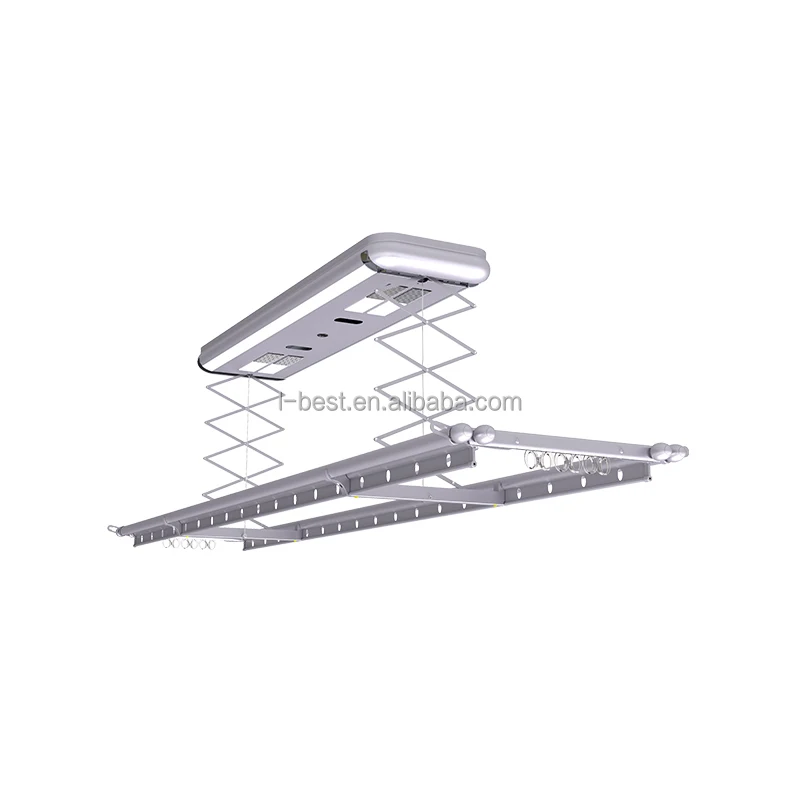
The first thing to evaluate is manufacturing depth. A supplier that assembles components sourced entirely from third parties has almost no control over material consistency, tolerances, or quality at the component level. For a motorized or sensor-driven automatic clothes drying rack — where the motor unit, pulley mechanism, and control system all need to interact reliably — that lack of upstream control is a genuine risk. Suppliers with in-house production of core sub-assemblies tend to produce far more consistent output across repeat orders.
Certification coverage is the second filter, and it’s one buyers frequently undercheck. Electrical components in motorized drying racks need to meet the import requirements of the destination market — CE marking for Europe, ETL or UL recognition for North America, RoHS compliance for restricted substances. A supplier who cannot produce current, traceable certification documentation for these standards is not ready for compliant commercial export, regardless of what their product catalog says.
- Verify that certifications are issued to the supplier’s own legal entity — not a parent company or third-party trader
- Request test reports dated within the past certification cycle, not legacy documents
- Confirm which specific models are covered — blanket claims rarely apply to every SKU
- Ask whether the supplier supports re-certification if you require specification modifications
The third area — and the one most often skipped entirely — is OEM and specification flexibility. Retail buyers, distributors, and private-label brands rarely need an off-the-shelf product unchanged. Load capacity, motor speed, remote control protocol, finish, and packaging all tend to require adjustment. A supplier without documented OEM/ODM capability, or one that treats customization as an inconvenience rather than a core service, will create friction at every development stage. That friction compounds fast once production timelines are involved.
Core Supplier Qualification Criteria for Automatic Drying Rack Procurement
Qualifying an automatic clothes drying rack supplier requires more than reviewing a product catalogue and confirming price. The procurement decisions that create the most downstream problems — delayed shipments, failed compliance audits, inconsistent unit quality — almost always trace back to gaps in the initial supplier evaluation, not the purchase order itself.
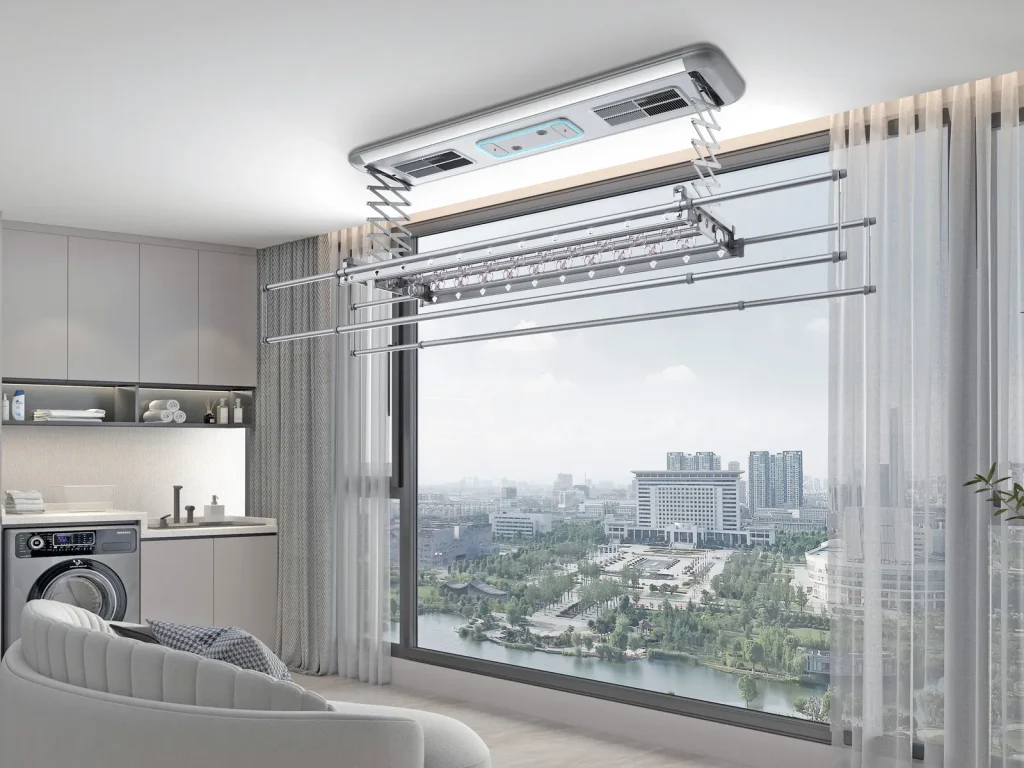
Production capacity and order scalability deserve early scrutiny. A supplier capable of fulfilling a trial order of two hundred units may not have the floor space, component inventory, or workforce to handle a seasonal surge at three or four times that volume. Ask specifically about maximum monthly output for the automatic clothes drying rack models under consideration, and whether capacity is shared across product lines or ring-fenced for key accounts. The answer tells you a great deal about how your order will be prioritized when their line is under pressure.
Quality control infrastructure is a separate conversation from certification — and an important one. Certifications confirm that a product design passed a test at a point in time. QC infrastructure determines whether the units leaving the factory this quarter match that tested design. Buyers should ask whether the supplier operates in-house QC at each production stage or relies solely on final inspection. Third-party audit access — whether through a buyer-nominated inspection agency or an established audit program — should be a non-negotiable term, not a special request.
The table below outlines the core qualification criteria procurement teams should assess before committing to a supplier for automatic clothes drying rack orders:
| Criterion | What to Evaluate | Red Flag |
|---|---|---|
| Production capacity | Monthly output ceiling, line flexibility, lead time under peak load | Vague answers or no documented capacity data |
| QC process | In-line inspection stages, defect rate tracking, audit access policy | Final inspection only, no third-party audit option |
| Export experience | Track record with target markets, familiarity with regional compliance requirements | Limited documentation, unfamiliarity with destination-market standards |
| MOQ and flexibility | Minimum order thresholds, mixed-SKU order handling, trial order terms | Rigid MOQs with no accommodation for new buyer relationships |
| Communication responsiveness | Dedicated project contact, response time during sampling and production | Rotating contacts, slow response during critical development stages |
Suppliers like LB Clothes Airer — operating within the export-oriented segment of China’s home hardware supply chain — tend to be evaluated on exactly these dimensions by international buyers, precisely because the stakes of a misaligned supplier relationship scale directly with order volume. Getting the qualification framework right before the first purchase order is placed is where procurement teams earn their value.
How to Evaluate Automatic Clothes Airer Manufacturers on OEM Capability, MOQ, and Lead Times
OEM capability is not a binary yes/no — it exists on a spectrum, and where a manufacturer sits on that spectrum determines how much of your product vision actually survives the development process. For buyers sourcing an automatic clothes drying rack at commercial scale, the practical question is whether the supplier can execute against a specification, or whether they’re simply rebadging an existing SKU with your logo on the box.
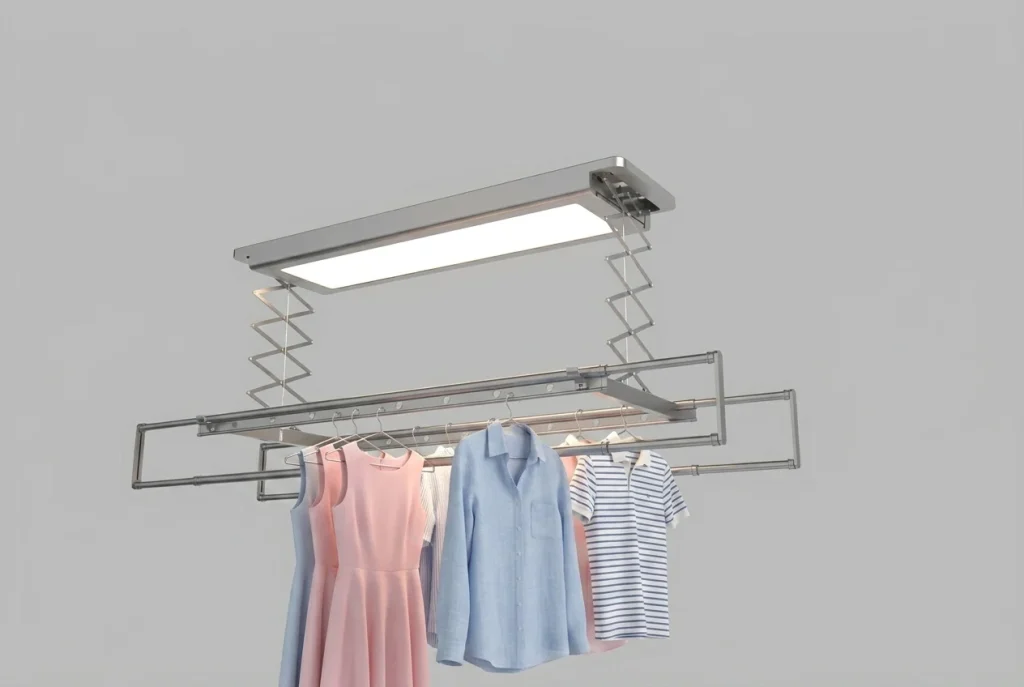
Start by requesting a capability audit rather than a catalog. Ask the manufacturer directly: what components can they modify, what requires third-party tooling, and what is fixed by their existing production line? A supplier with genuine OEM depth will answer that question with specifics — motor torque ranges, rod material options, control panel configurations, folding mechanism variants. A supplier without it will send you a brochure.
MOQ terms deserve equal scrutiny, particularly for buyers entering a new product category or testing a new supplier relationship. The headline MOQ figure matters less than the conditions attached to it. Key questions to put to any shortlisted manufacturer:
- Is the MOQ per SKU or across a mixed-SKU order?
- Are reduced-quantity trial orders available, and under what pricing structure?
- Does the MOQ change if the buyer supplies their own packaging design or tooling contribution?
- What happens to MOQ thresholds for repeat orders versus first orders?
Lead time transparency is where supplier relationships either build trust or erode it — fast. Standard production lead times for an automatic clothes drying rack typically vary based on order complexity, component sourcing, and current factory load. What matters more than the quoted figure is how the supplier handles exceptions: tooling delays, material substitutions, pre-shipment inspection scheduling. Suppliers with structured project coordination — a dedicated contact who tracks milestones rather than simply relaying production updates — tend to absorb those variables without the buyer absorbing the consequences.
The evaluation process itself signals something to the supplier. Buyers who arrive with structured questions, defined specification requirements, and realistic trial order terms tend to attract more responsive engagement from manufacturers like LB Clothes Airer, where export-oriented operations are built around exactly that kind of qualified, commercially serious inquiry.
Red Flags and Green Lights: Vetting Automatic Drying Rack Suppliers Before You Commit
Supplier vetting at this stage isn’t about ticking boxes — it’s about reading the signals that factories send before any purchase order is signed. And those signals are everywhere, if you know what to look for.
Start with documentation. A credible automatic clothes drying rack manufacturer should be able to produce current factory audit reports, relevant electrical safety certifications (CE, ETL, or market-equivalent), and material compliance records without hesitation. Delays or vague responses here aren’t administrative friction — they’re a preview of how exceptions will be handled mid-production.
Red flags worth treating seriously:
- Quoted MOQs that shift significantly once sampling begins — suggests the factory is managing capacity around spot buyers, not committed programs
- No dedicated export coordinator or project contact; communication routed through a generic sales inbox
- Reluctance to share pre-shipment inspection protocols or third-party QC access
- Motor and heating element specs that can’t be confirmed in writing before tooling commitment
- Packaging and labeling customization described as “possible” but never confirmed with a process or lead time
Green lights look different. Suppliers who respond to specification questions with counter-questions — asking about target markets, installation environments, or retail channel requirements — are engaging commercially, not just quoting. That kind of upstream thinking tends to surface downstream problems before they become expensive ones.
OEM and ODM capability is another genuine differentiator. For buyers sourcing an automatic clothes drying rack under a private label or with custom feature sets, the question isn’t simply whether a factory offers customization — it’s whether they have an internal process for managing design iterations, approval rounds, and specification changes without timeline collapse. Suppliers with structured project coordination, like LB Clothes Airer’s export-oriented workflow, tend to handle those variables systematically rather than reactively.
Finally, pay attention to how a supplier responds to a structured RFQ. Vague, templated replies signal a factory optimized for volume inquiries. Specific, technically grounded responses — addressing tolerances, certifications, and logistics terms directly — signal a manufacturer equipped to support a serious commercial relationship.
Conclusion
The automatic clothes drying rack market has matured enough that product quality alone won’t separate a good supplier from a great one — it’s the operational infrastructure behind the product that really matters.
So if you’re deep in the sourcing process right now, treat the RFQ response as a diagnostic. A supplier who answers with specifics is telling you something important about how they’ll handle the harder conversations later — the spec changes, the timeline pressures, the certification gaps that always seem to surface mid-project.
Get that part right, and the rest tends to follow.
Frequently Asked Questions
Q: What is an automatic clothes drying rack and how does it differ from a standard airer?
A: An automatic clothes drying rack uses a motorized system — typically ceiling-mounted — to raise and lower the drying frame at the press of a button, rather than requiring manual height adjustment or folding. The core advantage isn’t just convenience; it’s the ability to use vertical space that standard floor airers can’t reach, which matters a lot in smaller apartments where floor space is genuinely scarce.
Q: How much does an automatic clothes drying rack typically cost?
A: Retail pricing varies widely depending on motor quality, load capacity, and included features like UV drying lamps or warm-air fans — entry-level units often start in the mid-range consumer bracket, while feature-heavy models can cost several times more. For buyers sourcing at wholesale or OEM volume, the per-unit cost drops significantly, though tooling and certification requirements affect the final landed price.
Q: Is an automatic clothes drying rack worth it for everyday home use?
A: For households that air-dry laundry regularly — rather than relying on a tumble dryer — the ceiling-mounted automatic format genuinely earns its keep by keeping laundry out of the way while it dries. That said, the value proposition shifts if you’re renting, since installation typically requires drilling into the ceiling and running a power connection, which isn’t always feasible or permitted.
Q: How long does an automatic clothes drying rack take to dry clothes?
A: Drying time depends almost entirely on the model’s features: a basic motorized rack with no heating element dries clothes at roughly the same rate as any passive airer, while units fitted with warm-air circulation or infrared heating can cut drying time noticeably. Ambient humidity and ventilation in the room are still the dominant factors — the rack’s mechanics don’t change the physics.
Q: What load capacity should I look for in an automatic clothes drying rack?
A: Most residential automatic clothes drying racks are rated between 10 kg and 20 kg — enough for a standard household wash load when wet weight is accounted for (wet laundry is heavier than people expect). For commercial or laundry-room applications, confirmed load ratings with supporting test documentation matter more than the figure printed on the box.
Q: Can an automatic clothes drying rack be installed in a rental apartment?
A: Ceiling-mounted automatic racks require fixed installation and a nearby power source, which makes them a harder fit for renters without landlord approval. Some manufacturers offer wall-bracket or beam-clamp variants that reduce the ceiling penetration issue, though these are less common — worth asking about specifically if you’re sourcing for markets where rental housing dominates.
Q: Why do automatic clothes drying racks use a ceiling-mounted design rather than a floor-standing one?
A: The ceiling-mount format exists precisely because it solves a space problem that floor-standing airers can’t — warm air rises, so ceiling height is where passive drying is most efficient anyway. Keeping the rack elevated also frees the floor entirely, which is the whole point in compact urban living spaces where every square meter is spoken for.
Q: How do I know if an automatic clothes drying rack supplier is legitimate for bulk orders?
A: A credible supplier should be able to provide motor load test reports, relevant safety certifications for your target market (CE, ETL, or equivalent), and clear MOQ and lead-time terms in writing — not just verbal assurances. Suppliers like LB Clothes Airer, who operate with dedicated export coordination and OEM support, tend to respond to RFQs with traceable specifics rather than vague commitments, which is exactly the signal worth looking for before committing to a production run.